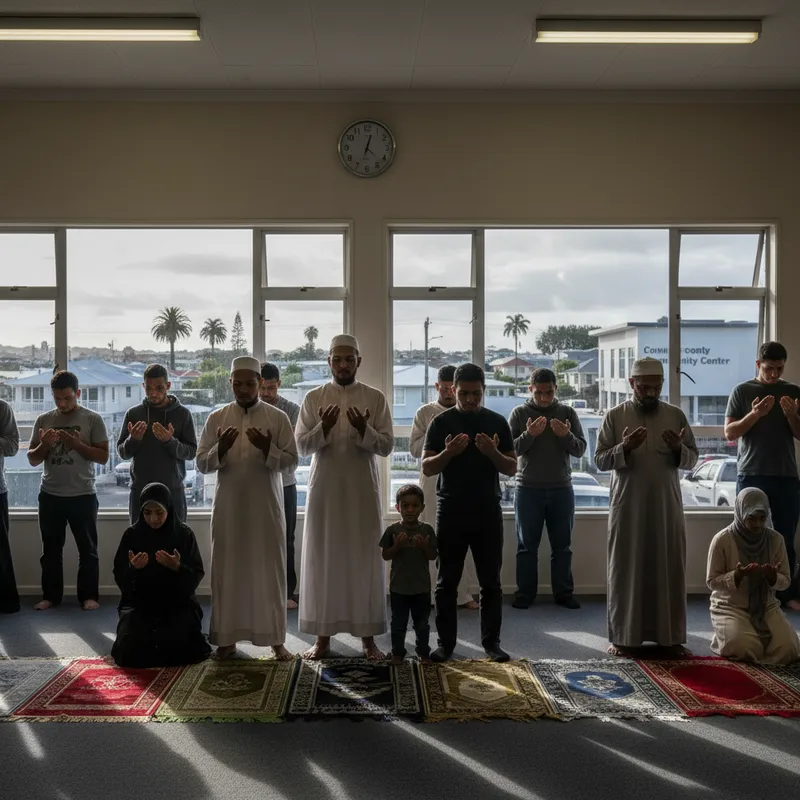
For thousands of Muslims living in Papatoetoe, Ōtara and across South Auckland, the rhythm of daily life is guided by a celestial clock. Five times a day, members of the community pause their work, study, and recreation to observe Salah, the Islamic ritual prayer. These moments provide a constant spiritual touchstone in a busy world, with times calculated precisely according to the sun's position, shifting minute by minute as the seasons progress.
This daily schedule is a core pillar of Islam. The timetable, published by organisations like The Federation of Islamic Associations of New Zealand (FIANZ), is a familiar sight in homes and mosques. For June in Auckland, the day begins with the Fajr prayer before dawn, followed by Zuhr at midday, Asr in the afternoon, Maghrib at sunset, and finally, Isha at night.
While the times vary slightly depending on the specific location and calculation method, a timetable for Papatoetoe shows Fajr (the pre-dawn prayer) at approximately 5:55 am in mid-June. This is followed by Sunrise around 7:30 am, a moment that is noted but is not one of the five prayer times.
The five daily prayers
Each of the five prayers has a specific window of time in which it must be performed and a unique significance within the daily cycle of devotion. They represent a direct line of communication with God and a reminder of one’s faith and purpose throughout the day.
Fajr: This prayer takes place in the darkness before the first light of dawn. It marks the beginning of the new day, requiring believers to rise early in an act of devotion before the world awakens. In Papatoetoe this week, the Fajr window opens around 5:56 am.
Zuhr: Occurring just after the sun has passed its zenith, this is the midday prayer. It offers a spiritual break during the busiest part of the day, a moment to reset one's focus and intention. For Aucklanders, this falls at approximately 12:20 pm in early June.
Asr: The afternoon prayer happens when the shadow of an object is twice its length. It serves as a reminder of the fleeting nature of time as the day begins to wind down. In mid-June, the Asr prayer is observed at around 2:53 pm.
Maghrib: Immediately after the sun has fully set below the horizon, the Maghrib prayer is performed. This prayer coincides with the breaking of the fast during the month of Ramadan and signifies the end of the day. This week, Maghrib is at 5:11 pm.
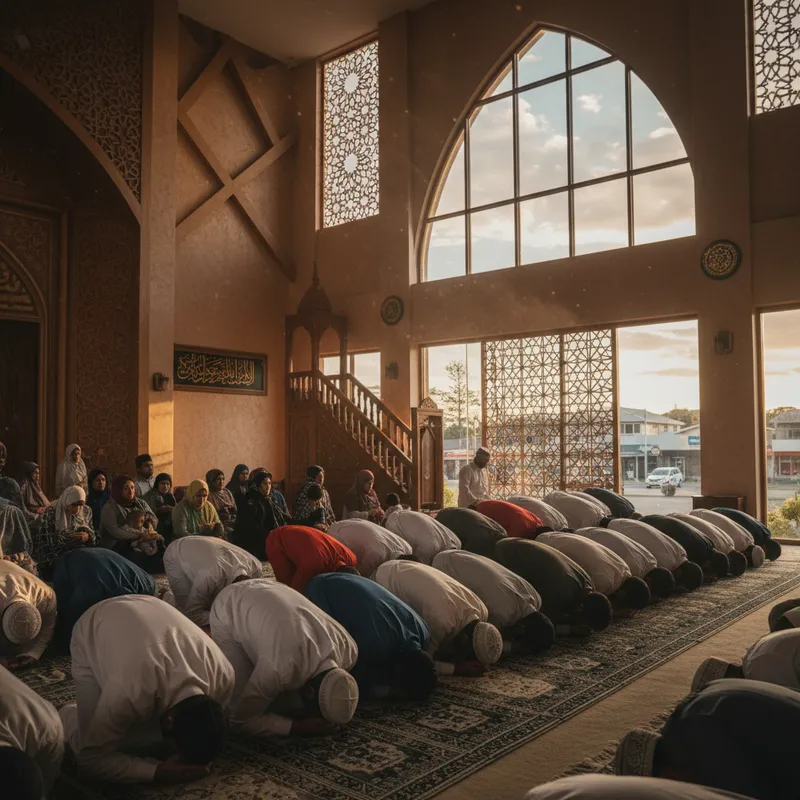
Isha: The final prayer of the day is Isha, which takes place when the sky is completely dark. It is a time for reflection on the day that has passed and to seek peace before sleep. The time for Isha in Auckland is currently around 6:44 pm.
A centre for community
While prayers can be performed at home, in the workplace, or anywhere that is clean, congregational prayer at a local mosque, or masjid, is highly encouraged, particularly for men. For many in Papatoetoe, Masjid Muhammad on Park Avenue serves as a vital spiritual and community hub. Here, believers can pray together, attend lessons, and connect with fellow Muslims.
The sense of community is a cornerstone of faith in South Auckland. It extends beyond specific denominations, with various groups contributing to the area's social fabric. For instance, the ‘Church to community’ initiative recently held at the Ōtara shopping centre, offering free food parcels and sausage sizzles, highlights the broader role that faith-based organisations play in supporting residents. This spirit of service and connection is a shared value across different beliefs and is supported by local leaders like the recently elected Ōtara-Papatoetoe Local Board chair, Vī Hausia. This integration of faith into daily life is a common thread for many professionals and families in the region. Many balance their work commitments, which might include attending events like the upcoming Waikato University environmental planning studies, with their religious obligations.
A shifting schedule
The prayer times are not static; they are in constant, gradual flux. As New Zealand moves deeper into winter and the days reach their shortest, the time between the afternoon (Asr) and sunset (Maghrib) prayers becomes noticeably compressed. Conversely, as the Earth tilts back towards summer, the prayer times will spread further apart, with Fajr becoming much earlier and Isha much later.
This astronomical basis for prayer times is explained in detail by religious authorities like FIANZ. The calculations ensure that no matter where a Muslim is in the world, their prayers are oriented towards the same celestial rhythm. This connects the local community in Papatoetoe and Ōtara with the global Muslim population of over a billion people.
Managing this schedule requires planning, particularly when booking appointments. Many Muslims schedule their days, including visits to local doctors and medical centres, around these five key moments, weaving their worldly tasks around their spiritual commitments.
As June continues, the prayer schedule will continue its incremental daily shift. For example, by the end of the month, Fajr in Auckland will be at 6:02 am, and Maghrib will be at 5:14 pm, reflecting the slow march of time as the city moves past the winter solstice.