Papatoetoe is voting again after a judge voided last year’s local board election.
The court found ballots had been cast without the rightful voter’s knowledge, triggering a rare re-run in Auckland’s south.
Why papatoetoe is holding a by-election in 2026
The Papatoetoe subdivision of the Papatoetoe-Ōtara Local Board returned an unusual result at the last election. A slate calling itself the Papatoetoe-Ōtara Action Team, known as POAT, won all four Papatoetoe seats.
The winners unseated all four incumbents. Their campaign stood out for uniform yellow hoardings and matching neckties, and for limited publicly available information compared with other tickets.
Labour candidate Lehopoaome Vi Hausia challenged the result. He teamed up with KC Simon Mitchell and filed a civil case in the Manukau District Court.
Principal Electoral Officer Dale Ofsoske was the respondent. District Court Judge RJ McIlraith ordered five ballot boxes be delivered to Manukau for examination by the judge, Ofsoske, and lawyers.
What the court found about irregular ballots
Evidence presented to the court pointed to sharp turnout spikes on particular streets. Hausia’s evidence showed that while turnout averaged 7% higher than the previous election, some streets rose by more than 200%.
One of the streets cited was Ashlynne Avenue, a short residential street running parallel to a main route. Residents told the court it is mainly used by locals, not through-traffic.
The case also examined special votes. The court heard that where a normal local election might see fewer than half a dozen special ballots, this election saw “easily ten times as many”.
During the examination, 79 voting papers were identified as having been cast “without the rightful voter’s knowledge” and in favour of the POAT candidates. The respondent also acknowledged “irregularities” in some ballots.
On 16 December, Judge McIlraith voided the election. He ruled the irregularities uncovered could represent wider problems and could have materially affected the result.
Who is standing, and what changed for the re-run
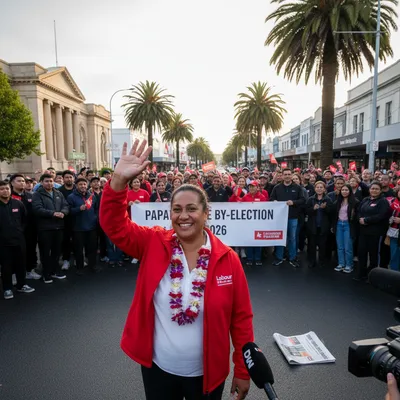
The by-election has drawn a large field. Twenty candidates are standing, including the previous POAT and Labour slates and the same Citizens and Ratepayers candidate.
Several independents are also running. They include Karl Mokaraka, described in a previous television report as a “serial heckler”.
A new ticket has also entered the race, Independently Papatoetoe. It is led by local businessman and former local board member Albert Lim and has leafletted letterboxes in recent days.
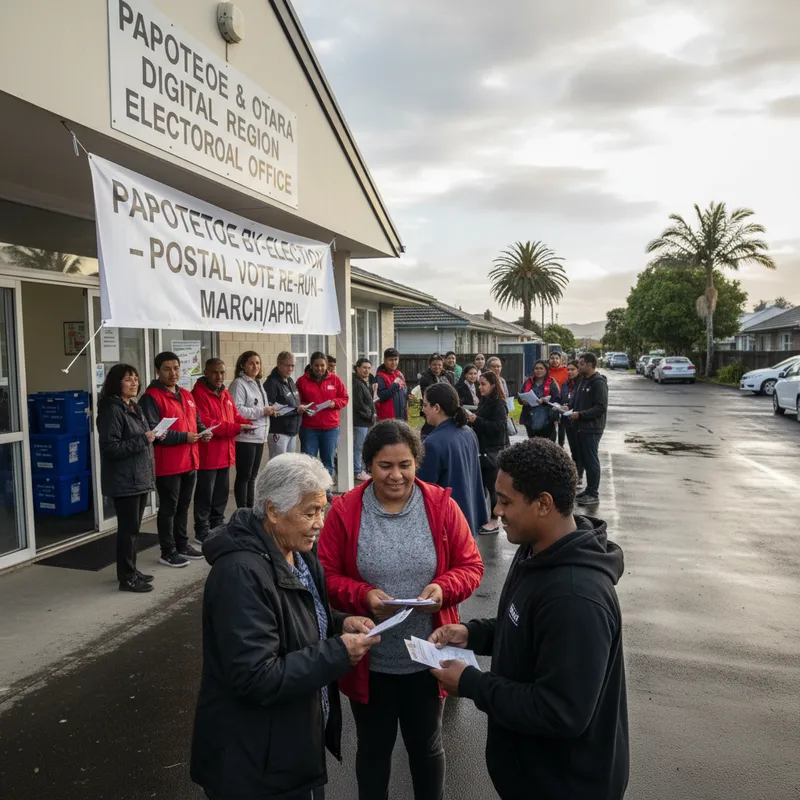
Voters will again use postal ballots. Ballots began arriving in letterboxes on 9 March, with a month for returns.
What the high court decision means for the by-election
POAT sought a High Court judicial review of Judge McIlraith’s decision. High Court Justice Jane Anderson reserved her decision in February.
Justice Anderson upheld the District Court ruling shortly before ballot packs were sent. That left the by-election timetable intact and cleared the way for voting to proceed.
POAT has said it “were not properly served with the petition [filed in the District Court] as required.” The High Court outcome means the voiding stands despite that challenge.
The court process did not bar candidates from re-standing. The POAT candidates are contesting again, seeking what they describe as a new mandate.
Claims of fraud, police complaints, and calls to scrap postal voting
Outside the court case, residents learned police had investigated 16 complaints alleging electoral fraud. The complaints included alleged stolen ballots and “treating”, where candidates provide food or gifts to prospective voters.
It is unclear whether that investigation remains active. Residents involved in the community response said they were not aware of any public findings that identified specific wrongdoers.
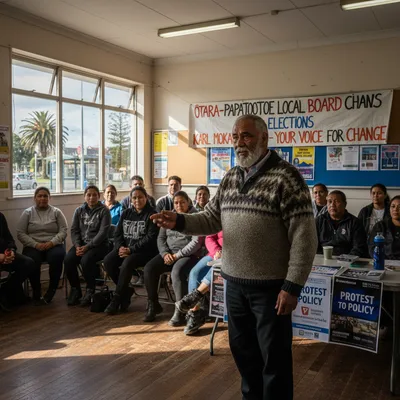
Former local board member Dawn Trenberth set up a Facebook group called Protect our Local Democracy. The group aims to petition Parliament to remove postal voting from future local elections.
Those campaigners want the Electoral Commission to oversee local elections. The Commission currently runs parliamentary elections and referendums, and sets rules on enrolment and voting under New Zealand electoral law.
For readers wanting the official framework for how local elections are run, the Department of Internal Affairs outlines the system and the role of councils in its guidance on local elections.
The Papatoetoe dispute has also sharpened interest in how residents engage with local decisions between elections. In neighbouring debates over transport planning, Aucklanders have tracked projects such as cycle and walking upgrades as they move through design and consultation.
Candidate information has again become a point of focus. During the earlier contest, only one of the four POAT candidates was shown in official information as living inside the electorate.
Some voters said they relied on third-party profiles when available. One such site, policy.nz, carried information from the Labour slate and a Citizens and Ratepayers candidate, with limited entries from others.
The Papatoetoe-Ōtara Local Board has seven members in total. It includes four members elected from Papatoetoe and three from Ōtara.
Residents opposed to POAT said the new board “disenfranchised Ōtara” after taking office and cited disagreements over how power should be shared across the two subdivisions. POAT members argued they had an electoral mandate for their approach.
Photos circulated online showing POAT members with National MPs and with Sunny Kaushal. The political associations became part of the local argument about who was backing whom, and why.
Election experts have long warned that postal voting can be vulnerable to interference if ballots are collected or handled by others. New Zealand councils use postal voting widely for local elections, while in-person voting is standard in general elections.
The by-election result will help decide whether the court case marks a one-off breakdown or a sign of systemic weaknesses. For Papatoetoe, it has already reset trust in the process as much as it resets the board table.
Ballots must be returned within a month of 9 March, with the by-election expected to be decided in early April.