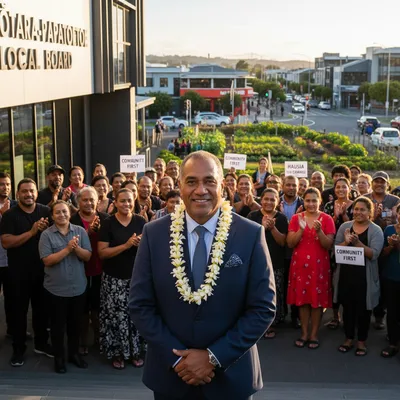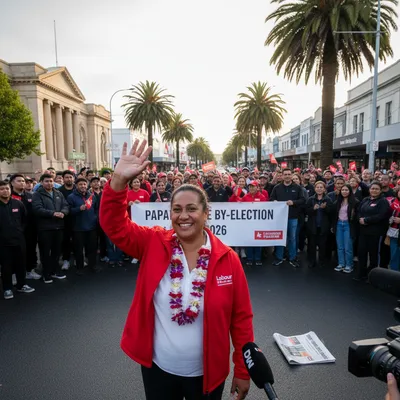
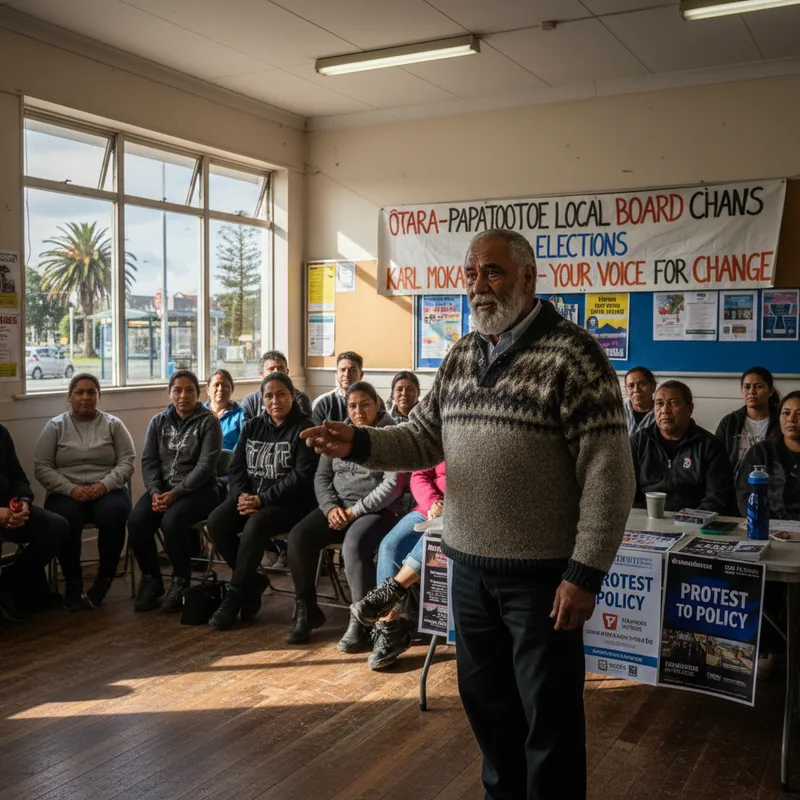
A man who gained national notoriety for his serial heckling of New Zealand’s political leaders is now seeking to join their ranks, swapping his protest antics for a place at the policy table. Karl Mokaraka, a familiar face from viral news clips and tense political stand-offs, is standing as a candidate for the Ōtara-Papatoetoe local board in an upcoming by-election.
He says his goal is to move from being a disruptive voice on the outside to an effective advocate "from inside the tent". This shift in strategy marks a significant new chapter for the man who has confronted figures from across the political spectrum, including Christopher Luxon, Chris Hipkins, and David Seymour.
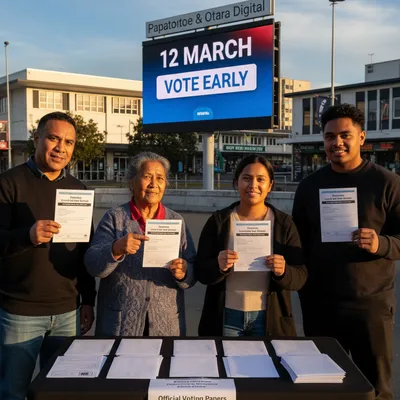
The opportunity arises from a by-election ordered by the High Court after it was discovered 79 voting papers were improperly cast in the 2023 local body elections. The court’s decision voided the previous result, triggering a new race for the Papatoetoe subdivision seat where voting is set to close on 9 April.
From protest to politics
Mr Mokaraka (Ngāpuhi, Ngāti Raukawa) became a prominent figure during the 2023 general election campaign, known for his theatrical and persistent interruptions. His most famous moment came when an image of him perched on a fence behind then-National leader Christopher Luxon and Simeon Brown during a press conference in Botany went viral. He says his motive was to challenge Mr Luxon on what he saw as an absence on the issue of local crime.
This was one of several high-profile confrontations. He confronted then-Prime Minister Chris Hipkins at the Ōtara Markets, yelling "no more Labour pains" until Mr Hipkins departed. He also infiltrated an Act Party conference at Auckland’s Civic Theatre, disguising himself with a fake moustache to get past security. "I had to dress up to get into the venue," Mr Mokaraka said. After registering under his own name, he waited for his moment to interrupt David Seymour, telling him, "don’t forget about South Auckland," before being removed by security.
While his actions have been dismissed by some as mere nuisance, Mr Mokaraka insists they are driven by a deeper purpose. He rejects the label of a serial heckler, framing his interruptions not as personal attacks but as expressions of "families' anguish" and a protest for those who feel ignored by the political establishment, echoing concerns seen in the Boston University community protests Pride flag removals.
A history of disruption
Not all of Mr Mokaraka’s activities have been received as harmless protest. He has been ejected from Parliament's public gallery on multiple occasions for his disruptions. During one incident, he yelled at Prime Minister Luxon to "make New Zealand great", prompting a rebuke from Speaker of the House Gerry Brownlee, who called it an "unacceptable disruption".
Te Pāti Māori co-leader Debbie Ngarewa-Packer was heard telling him to get out in te reo, and it took at least four security guards to remove him from the gallery rail. He later sent a text message apology to former Labour minister Willie Jackson, expressing regret for any offence caused, stating he did not intend to "trample on the mana" of Mr Jackson’s mother’s marae or her work in South Auckland.
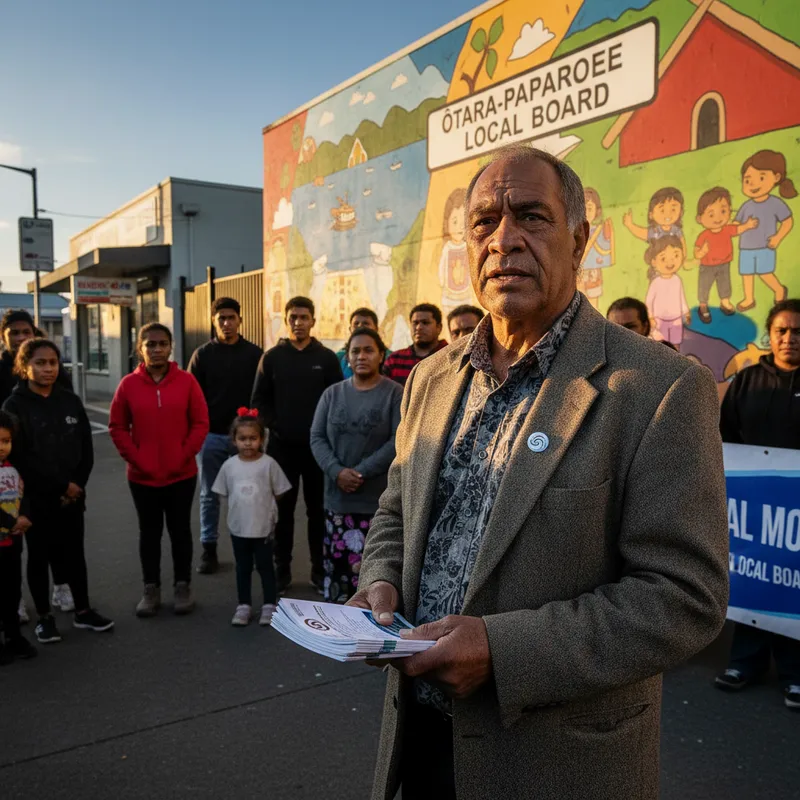
Despite these clashes, Mr Mokaraka maintains his focus is on the issues, not the individuals. "I ask the politicians what they are doing for those who have no voice and are finding things tough," he says. Now, he hopes to bring that same questioning spirit to the formal setting of the local board.
Not a party first, people last
This is not Mr Mokaraka's first foray into electoral politics. He stood unsuccessfully for Vision NZ in the 2023 general election. This time, however, he is running as an independent, a decision he says is crucial to his mission. “I’m an independent and not a party first, people last,” he said, emphasising his desire to be directly accountable to the community.
Born and raised in Ōtara, Mr Mokaraka has deep roots in the community he seeks to represent. A father of four who has been married to his wife Teresa for 25 years, he has a professional background in financial management, which he jokingly refers to as "some might say debt collection", and youth work. He says these experiences provide him with a direct line of sight into the struggles many local families face, from financial hardship to the need for better youth engagement. Issues like providing more diverse housing options are central to the community's future.
My mum came out of the gang, changed her life and became a Christian and I saw her commitment to helping others. That’s what grounded me. I try to speak for those who don’t have a voice.
A voice for the voiceless
Mr Mokaraka credits his mother’s life story as a foundational influence. "My mum came out of the gang, changed her life and became a Christian and I saw her commitment to helping others," he says. "That’s what grounded me." This upbringing, he says, installed in him a drive to advocate for the underdog.
"Locals encouraged me because I’m not afraid to stand up for our community," he said of his decision to run. "I want to make sure families have a voice on local issues." He believes his background in finance and youth work gives him a unique and valuable perspective. "I have a special link to it," he says.
As the community considers its options in the by-election, which was triggered by a High Court ruling, voters in Papatoetoe are faced with a candidate who promises to be anything but a quiet seat-warmer. With a track record of demanding attention, Mr Mokaraka now hopes to prove he can be just as effective working within the system as he was protesting against it.
His potential entry into local governance raises questions about the path from activism to public office, and whether his disruptive energy can be channelled into constructive outcomes for a community grappling with the challenges of a growing city, from celebrating its cultural heritage in local institutions like the Ōtara school bilingual units to enjoying a vibrant local arts scene similar to that found across Auckland, such as the packed music calendar in Arch Hill.
If elected, Mr Mokaraka says his heckling days will likely be over as he focuses on representing the constituents of the Ōtara-Papatoetoe local board. Voting in the by-election closes on 9 April.