Papatoetoe & Otara Weather
Weather in Papatoetoe & Ōtara, Auckland: current conditions, forecast, warnings, monthly averages and seasonal guide
11°C
Clear sky
Updated 29 Apr, 4:19 am
High / Low
19°C / 10°C
Feels Like
10°C
Humidity
92%
Wind
E 4 km/h
Wind Gusts
8 km/h
Dew Point
10°C
Pressure
1025 hPa
Rain Today
0 mm
UV Index
4.4 Moderate
Hourly forecast
Now
13°C
4km/h
01:00
12°C
4km/h
02:00
12°C
5km/h
03:00
12°C
5km/h
04:00
11°C
4km/h
05:00
11°C
4km/h
06:00
11°C
4km/h
07:00
10°C
4km/h
08:00
12°C
5km/h
09:00
14°C
2km/h
10:00
16°C
10%
1km/h
11:00
18°C
24%
3km/h
12:00
18°C
33% 0.1mm
4km/h
13:00
19°C
34%
5km/h
14:00
19°C
30%
6km/h
15:00
19°C
24%
7km/h
16:00
18°C
16%
6km/h
17:00
18°C
7%
6km/h
18:00
16°C
5km/h
19:00
15°C
4km/h
20:00
15°C
2km/h
21:00
15°C
0km/h
22:00
14°C
1km/h
23:00
13°C
2km/h
Thu 30 Apr
00:00
13°C
4km/h
01:00
13°C
5km/h
02:00
12°C
5km/h
03:00
12°C
6km/h
04:00
12°C
7km/h
05:00
12°C
7km/h
06:00
12°C
6km/h
07:00
12°C
9km/h
08:00
12°C
12km/h
09:00
13°C
11km/h
10:00
15°C
10km/h
11:00
17°C
10km/h
12:00
18°C
15km/h
13:00
18°C
2%
15km/h
14:00
18°C
5%
13km/h
15:00
19°C
6%
10km/h
16:00
19°C
5%
9km/h
17:00
18°C
2%
8km/h
18:00
16°C
7km/h
19:00
15°C
7km/h
20:00
15°C
8km/h
21:00
14°C
13km/h
22:00
13°C
14km/h
23:00
13°C
14km/h
7-day forecast for Papatoetoe & Otara
| Day | Conditions | Rain | Temp | Summary | |
|---|---|---|---|---|---|
| Today29 Apr | Light drizzle | 34%0.1mm | 19°C10°C | Light drizzle with a high of 19°C and low of 10°C. 34% chance of rain, up to 0.1mm. UV index 4.4 (moderate). | |
| Thu30 Apr | Overcast | 6% | 19°C12°C | Overcast with a high of 19°C and low of 12°C. 6% chance of rain. UV index 4.4 (moderate). | |
| Fri1 May | Overcast | 0% | 18°C9°C | Overcast with a high of 18°C and low of 9°C. No rain expected. UV index 4.4 (moderate). | |
| Sat2 May | Mainly clear | 2% | 17°C9°C | Mainly clear with a high of 17°C and low of 9°C. 2% chance of rain. UV index 4.3 (moderate). | |
| Sun3 May | Partly cloudy | 0% | 19°C8°C | Partly cloudy with a high of 19°C and low of 8°C. No rain expected. UV index 4.3 (moderate). | |
| Mon4 May | Overcast | 4% | 18°C10°C | Overcast with a high of 18°C and low of 10°C. 4% chance of rain. UV index 2.8 (low). | |
| Tue5 May | Overcast | 10% | 19°C15°C | Overcast with a high of 19°C and low of 15°C. 10% chance of rain. UV index 3.5 (moderate). |
Extended outlook — days 8 to 14
Extended forecasts beyond 7 days are less reliable and should be used as a general guide only.
| Day | Conditions | Rain | Temp | Summary | |
|---|---|---|---|---|---|
| Wed6 May | Light drizzle | 25%1.2mm | 19°C17°C | Light drizzle with a high of 19°C and low of 17°C. 25% chance of rain, up to 1.2mm. UV index 2.2 (low). | |
| Thu7 May | Light drizzle | 35%1.2mm | 19°C16°C | Light drizzle with a high of 19°C and low of 16°C. 35% chance of rain, up to 1.2mm. UV index 3.7 (moderate). | |
| Fri8 May | Slight rain | 29%7.6mm | 19°C16°C | Slight rain with a high of 19°C and low of 16°C. 29% chance of rain, up to 7.6mm. UV index 2.5 (low). | |
| Sat9 May | Slight rain | 37%2.6mm | 17°C10°C | Slight rain with a high of 17°C and low of 10°C. 37% chance of rain, up to 2.6mm. UV index 3 (moderate). | |
| Sun10 May | Moderate rain | 47%23.7mm | 15°C10°C | Moderate rain with a high of 15°C and low of 10°C. 47% chance of rain, up to 23.7mm. UV index 3.4 (moderate). | |
| Mon11 May | Light drizzle | 35%0.3mm | 14°C9°C | Light drizzle with a high of 14°C and low of 9°C. 35% chance of rain, up to 0.3mm. UV index 3 (moderate). | |
| Tue12 May | Overcast | 20% | 16°C8°C | Overcast with a high of 16°C and low of 8°C. 20% chance of rain. UV index 3.5 (moderate). |
Sun & Moon — Papatoetoe & Otara
Sunrise06:58
Sunset17:37
Daylight10h 39m
PhaseLast Quarter
Illumination54%
UV Index — Papatoetoe & Otara
4.4
Moderate
03681114
Some protection needed. Wear sunglasses on bright days.
Air Quality — Papatoetoe & Otara
15
Good
020406080100+
PM2.57.8 µg/m³
PM109.9 µg/m³
US AQI32
Air quality is excellent. Enjoy outdoor activities freely.
Air quality data from Open-Meteo
Climate overview
Papatoetoe and Ōtara, situated within the wider Auckland region, experience a warm temperate climate without a dry season and with hot summers, classified as Cfa under the Köppen system. This classification is typical for much of New Zealand's northern North Island. The climate is predominantly shaped by its mid-latitude oceanic location, proximity to the Tasman Sea and Pacific Ocean, and the prevailing westerly winds. This maritime influence moderates temperature extremes, resulting in mild winters and warm, humid summers, particularly when compared to inland areas at similar latitudes. The absence of significant mountain ranges directly east or west means that Papatoetoe and Ōtara do not experience strong rain shadow effects from large-scale topographical features, allowing oceanic moisture to readily influence the area.
The large Tasman Sea acts as a significant thermal regulator, warming the air in winter and cooling it in summer. This oceanic current ensures that temperatures rarely drop below freezing in winter, and extreme heatwaves, while possible, are less severe and prolonged than in continental climates. Prevailing westerly to south-westerly winds bring moist air from the Tasman Sea, contributing to year-round rainfall. These winds enhance cloud cover and precipitation, especially during frontal passages. The general atmospheric circulation patterns around New Zealand mean that Papatoetoe and Ōtara are frequently impacted by migrating high-pressure systems, which bring periods of settled weather, interspersed with low-pressure troughs and cold fronts that deliver more unsettled conditions.
Altitude plays a minimal role in the immediate climate of Papatoetoe and Ōtara due to their relatively low and flat topography, typical of South Auckland. However, the slightly elevated volcanic cones within the Auckland region can create localised variations in wind exposure and very subtle temperature differences. Compared to cities like Sydney, Australia, which also shares a Cfa classification, Auckland (and thus Papatoetoe/Ōtara) experiences generally cooler summers and milder winters, with more consistent rainfall spread throughout the year. While Sydney can have more pronounced summer heat and a slightly drier autumn, Auckland's maritime influence provides a more equable temperature regime. The climate allows for lush, subtropical-like vegetation and supports a wide range of outdoor activities for much of the year, characteristic of its "four seasons in one day" reputation.
Papatoetoe & Otara receives approximately 1200mm to 1300mm (47 to 51 inches) annually of rainfall annually, with the wettest months from June to August, with July often being the wettest month. Papatoetoe and Ōtara receive an average of around 2000-2100 sunshine hours annually, which is slightly above the national average for New Zealand. Daily averages typically range from 7-8 hours in summer, decreasing to 4-5 hours in winter. This abundance of sunshine, particularly in the warmer months, contributes to high UV levels, necessitating robust sun protection. The ample sunshine supports a vibrant outdoor lifestyle, with many community and recreational activities enjoying favourable weather, though cloud cover can be variable even on warm days.
Within Papatoetoe and Ōtara, microclimates are influenced primarily by proximity to the coast, urban development, and local topography, despite the generally flat nature of South Auckland. The nearby Manukau Harbour provides some coastal moderation, leading to slightly milder temperatures, particularly at night, and often a refreshing sea breeze, known locally as a "doctor," which can temper summer heat. Areas closer to the harbour might experience slightly higher humidity.
Conversely, as part of the wider Auckland urban spread, Papatoetoe and Ōtara can experience an urban heat island effect, where built-up areas retain heat more effectively than surrounding rural or vegetated zones. This means temperatures, especially overnight, can be a degree or two warmer in densely developed areas compared to more open spaces. Localised wind patterns can also be influenced by buildings and street canyons, creating sheltered or more exposed areas. While significant rain shadows are rare, intense convective showers can be very localised, meaning rainfall can vary within short distances.
Monthly averages for Papatoetoe & Otara
Climate data sourced from NIWA CliFlo climate database for the Auckland region. Summer temperatures range from 20°C to 25°C (68°F to 77°F), with occasional highs into the late 20s, while winter sits between 10°C to 16°C (50°F to 61°F).
| Month | Avg High | Avg Low | Rain (mm) | Rain Days |
|---|---|---|---|---|
| January | 24°C | 16°C | 75 | 8 |
| February | 24.5°C | 16.5°C | 65 | 7 |
| March | 23°C | 15°C | 85 | 9 |
| April | 20°C | 13°C | 90 | 10 |
| May | 17.5°C | 10.5°C | 110 | 12 |
| June | 15°C | 9°C | 125 | 14 |
| July | 14.5°C | 8°C | 135 | 14 |
| August | 15.5°C | 8.5°C | 120 | 13 |
| September | 17°C | 10°C | 100 | 11 |
| October | 18.5°C | 11.5°C | 90 | 10 |
| November | 20.5°C | 13°C | 80 | 9 |
| December | 22.5°C | 15°C | 80 | 9 |
Water temperature
The water temperatures in the Manukau Harbour and nearby coastal areas around Papatoetoe and Ōtara vary significantly with the seasons. In summer, from December to February, water temperatures typically range between 20–22°C (68–72°F), making it comfortable for swimming, paddleboarding, and other water activities without a wetsuit, particularly in sheltered harbour beaches.
During the winter months, from June to August, water temperatures drop to around 14–16°C (57–61°F). At these temperatures, a wetsuit is generally recommended for sustained swimming or surfing to ensure comfort and safety. These cooler temperatures also influence marine life, with some species migrating to warmer waters or deeper areas during winter. Estuaries and shallow bays within the Manukau Harbour can warm up faster in summer and cool down quicker in winter compared to the open ocean.
Summer water temperatures around Papatoetoe & Otara range from 20–22°C, cooling to 14–16°C in winter.
Things to do this winter in Papatoetoe & Otara
Winter calls for warmer clothing, including a waterproof and windproof jacket, jumpers, and long trousers. While snow is virtually unheard of, mornings can be chilly, so hats and gloves might be appreciated on colder days, especially early mornings or late evenings. Driving requires caution, particularly on frosty mornings (though rare) and during heavy rain, which can reduce visibility and increase stopping distances. Check local road conditions before travelling, especially if heading into more elevated or rural areas. Flu season is also more prevalent, so practicing good hygiene is important.
- Explore the exhibitions at Auckland Art Gallery Toi o Tāmaki
- Visit the Stardome Observatory & Planetarium for a celestial escape
- Enjoy indoor shopping and dining at Manukau Supa Centa
- Attend cultural performances and events at the Vodafone Events Centre
- Warm up with a coffee at a local café in Papatoetoe town centre
- Take a scenic drive through the Hunua Ranges regional park
Best time to visit Papatoetoe & Otara
The best time to visit Papatoetoe and Ōtara, and indeed the wider Auckland region, is during the summer months, from December to March. During this period, visitors can expect the warmest temperatures, highest sunshine hours, and lowest average rainfall, making it ideal for outdoor activities, beach visits, and exploring local parks and markets. The shoulder seasons of autumn (April-May) and spring (October-November) also offer pleasant weather with fewer crowds and slightly cooler temperatures, which can be perfect for hiking or attending open-air events without the peak summer heat.
Visitors wishing to avoid the cooler, wetter weather should generally steer clear of the winter months from June to August, although mild days are still common. However, even in winter, there are many indoor attractions and cultural events to enjoy. While Auckland typically avoids extreme weather, intense summer humidity or occasional heavy rainfall can occur, so being prepared for varying conditions is always advisable. The vibrant festival scene and major events often align with the summer and shoulder seasons, offering a great balance of comfort and activity.
Weather radar — Papatoetoe & Otara
View live rain radar for Papatoetoe & Otara
Live radar imagery from the official weather service →
Weather warnings & safety
Papatoetoe and Ōtara face several severe weather risks throughout the year, primarily linked to New Zealand's position in the mid-latitudes. Thunderstorms are common, particularly in spring and summer, sometimes bringing heavy localized rainfall, hail, and strong gusts of wind. These can lead to flash flooding in low-lying areas or where drainage systems are overwhelmed. Heatwaves, while not as extreme or prolonged as in some other countries, can occur in summer, posing health risks, especially for vulnerable populations.
Bushfires or wildfires are a concern during extended dry periods in summer and autumn, particularly in areas bordering parks, reserves, or rural fringe land with significant vegetation. While direct hits from tropical cyclones are rare, the remnants of ex-tropical cyclones can track south, bringing intense rainfall, damaging winds, and coastal storm surge to the region, typically between January and April. Frost is infrequent and generally mild, usually limited to clear, still winter nights in sheltered inland spots. Drought can occasionally impact the region after several months of below-average rainfall, affecting water supplies and horticulture.
Official warning sources: MetService Warnings New Zealand · MetService Auckland Forecast · Auckland Council Safeswim
Latest weather news — Papatoetoe & Otara
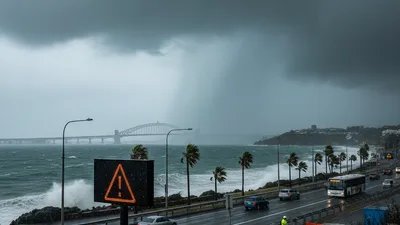
Weather near Papatoetoe & Otara
Frequently asked questions about Papatoetoe & Otara weather
What is the weather in Papatoetoe & Otara right now?
Right now in Papatoetoe & Otara it is 11°C and clear sky. Today's high is 19°C with a low of 10°C. Humidity is at 92%. Wind is E at 4 km/h.
What is the 14-day forecast for Papatoetoe & Otara?
Today (29 Apr): Light drizzle with a high of 19°C and low of 10°C. 34% chance of rain, up to 0.1mm. UV index 4.4 (moderate). Thu (30 Apr): Overcast with a high of 19°C and low of 12°C. 6% chance of rain. UV index 4.4 (moderate). Fri (1 May): Overcast with a high of 18°C and low of 9°C. No rain expected. UV index 4.4 (moderate). Sat (2 May): Mainly clear with a high of 17°C and low of 9°C. 2% chance of rain. UV index 4.3 (moderate). Sun (3 May): Partly cloudy with a high of 19°C and low of 8°C. No rain expected. UV index 4.3 (moderate). Mon (4 May): Overcast with a high of 18°C and low of 10°C. 4% chance of rain. UV index 2.8 (low). Tue (5 May): Overcast with a high of 19°C and low of 15°C. 10% chance of rain. UV index 3.5 (moderate). Wed (6 May): Light drizzle with a high of 19°C and low of 17°C. 25% chance of rain, up to 1.2mm. UV index 2.2 (low). Thu (7 May): Light drizzle with a high of 19°C and low of 16°C. 35% chance of rain, up to 1.2mm. UV index 3.7 (moderate). Fri (8 May): Slight rain with a high of 19°C and low of 16°C. 29% chance of rain, up to 7.6mm. UV index 2.5 (low). Sat (9 May): Slight rain with a high of 17°C and low of 10°C. 37% chance of rain, up to 2.6mm. UV index 3 (moderate). Sun (10 May): Moderate rain with a high of 15°C and low of 10°C. 47% chance of rain, up to 23.7mm. UV index 3.4 (moderate). Mon (11 May): Light drizzle with a high of 14°C and low of 9°C. 35% chance of rain, up to 0.3mm. UV index 3 (moderate). Tue (12 May): Overcast with a high of 16°C and low of 8°C. 20% chance of rain. UV index 3.5 (moderate).
What is the air quality in Papatoetoe & Otara today?
The current air quality index in Papatoetoe & Otara is 15 (European AQI), rated "Good". Air quality is excellent. Enjoy outdoor activities freely. PM2.5 is 7.8 µg/m³. PM10 is 9.9 µg/m³.
What is the fastest way to check the hourly weather forecast for Papatoetoe & Ōtara?
For the most up-to-date hourly weather forecast, including temperature, rain, wind, and humidity, visit the /weather/hourly sub-page of our website. This page provides a detailed breakdown for the next 48 hours, allowing you to plan your activities with precision. It updates in real-time to reflect the latest meteorological conditions. You can also see at-a-glance summaries for the next few hours directly on the main weather page.
How strong are the winds typically in Papatoetoe & Ōtara?
Papatoetoe and Ōtara experience moderate winds, predominantly westerlies originating from the Tasman Sea, which help to moderate temperatures. Average wind speeds typically range from 10-20 km/h, but can pick up significantly during frontal systems or strong low-pressure events. For current wind speed, direction, gusts, and a 14-day wind summary, check the /weather/wind sub-page. This resource is particularly useful for those planning outdoor activities like boating or cycling.
What is the UV index like in Papatoetoe & Ōtara and how can I protect myself?
The UV index in Papatoetoe and Ōtara can be high to very high, especially during summer months and even on cloudy days. Peak UV typically occurs between 10 AM and 4 PM. To protect yourself, always 'Slip, Slop, Slap and Wrap': Slip on a shirt, Slop on sunscreen (SPF30+), Slap on a hat, and Wrap on sunglasses. You can find the current UV index, hourly breakdown, a 7-day forecast, and a comprehensive protection guide on our /weather/uv sub-page.
What are the average rainfall patterns in Papatoetoe & Ōtara, and when is the wettest time of year?
Papatoetoe and Ōtara receive consistent rainfall throughout the year, averaging 1200-1300mm annually. The wettest months typically occur from June to August, with July often seeing the highest precipitation. However, heavy downpours can occur in any season, particularly during thunderstorms or remnants of ex-tropical cyclones. For daily rain totals, a 14-day forecast, and historical precipitation data, visit the /weather/rainfall sub-page.
When are sunrise and sunset times in Papatoetoe & Ōtara, and how can I track moon phases?
Sunrise and sunset times vary significantly throughout the year, with longer daylight hours in summer and shorter in winter. For precise daily sunrise and sunset times, along with daylight duration, moon phases, and a 14-day sun and moon table, consult the /weather/sunrise-sunset sub-page. This is ideal for planning outdoor activities or photography and staying informed about celestial events.
How is the air quality typically in Papatoetoe & Ōtara?
Air quality in Papatoetoe and Ōtara is generally good, reflecting New Zealand's relatively clean environment. However, urban activities, vehicle emissions, and residential heating can occasionally lead to localised reductions in air quality, particularly for PM2.5 and PM10 particles, during still winter days. Our /weather/air-quality sub-page provides real-time AQI readings, pollutant levels, and health advice based on the European AQI scale, helping you stay informed about local air conditions.
What is the climate like generally in Papatoetoe & Ōtara?
Papatoetoe and Ōtara experience a mild, humid subtropical climate (Cfa), characterised by warm, humid summers and mild, wet winters. The city's coastal location moderates temperature extremes, preventing severe cold or excessively hot conditions. Rainfall is distributed throughout the year, with a slight peak in winter. This climate supports lush greenery and allows for a wide array of outdoor activities across most seasons.
Are there any extreme temperature events in Papatoetoe & Ōtara?
While Papatoetoe and Ōtara generally have a temperate climate, occasional extreme temperature events can occur. Summer can bring short heatwaves with temperatures reaching into the late 20s or low 30s. Conversely, winter nights can sometimes drop to near freezing, though severe frost is rare due to the maritime influence. These periods are usually brief, but it's always wise to check the forecast and prepare accordingly.
Is it safe to swim in the waters around Papatoetoe & Ōtara, and what are the water temperatures?
Swimming safely in the Manukau Harbour and nearby coastal areas depends on water quality and temperature. Water temperatures range from 20-22°C in summer, ideal for swimming, to 14-16°C in winter, when a wetsuit is recommended. For up-to-date information on water quality, especially after heavy rainfall, it is always best to check the Safeswim website. This resource provides real-time alerts and advice for safe swimming spots.
What should I wear when visiting Papatoetoe & Ōtara in different seasons?
Packing layers is key for Papatoetoe and Ōtara due to changeable weather. In summer, light clothing, a hat, and sunscreen are essential. Autumn and spring require a mix of light and warm layers, plus a waterproof jacket. Winter calls for warm, waterproof outerwear, sweaters, and closed-toe shoes. Always consider a compact umbrella or rain jacket regardless of the season, as showers can occur year-round.
What are the common severe weather risks in Papatoetoe & Ōtara?
Papatoetoe and Ōtara are susceptible to various severe weather events, including heavy rainfall leading to localised flooding, strong winds, and sometimes hail during thunderstorms. While direct tropical cyclones are rare, their remnants can bring significant disruption. During dry summers, there's a risk of bushfires. It's advisable to stay informed through official weather warnings, especially during periods of unsettled weather. Information on warnings can be found via MetService.
How do moon phases affect the tides in Papatoetoe & Ōtara and the Manukau Harbour?
Moon phases significantly influence the tides in Papatoetoe, Ōtara, and the Manukau Harbour. During new moons and full moons (spring tides), the gravitational pull of the sun and moon combine, resulting in higher high tides and lower low tides. Conversely, during quarter moons (neap tides), the sun and moon's gravitational forces are at right angles, leading to less extreme tides. This is important for activities like boating, fishing, and exploring tidal flats in the harbour. You can find moon phase information on our /weather/sunrise-sunset page which helps understand tidal patterns.
Are there any specific driving conditions to be aware of in Papatoetoe & Ōtara?
Driving in Papatoetoe and Ōtara is generally straightforward, but certain conditions warrant extra care. Heavy rainfall can cause surface flooding, reducing visibility and increasing stopping distances. Potholes can develop after prolonged wet spells. During summer holidays, traffic congestion increases significantly, especially on routes to popular destinations. Always adhere to speed limits, drive to the conditions, and be mindful of pedestrians and cyclists in urban areas. Check traffic updates before your journey.