The Electoral Commission is urging all New Zealanders to check their enrolment status ahead of the 2026 general election, following a significant law change that eliminates same-day voter registration.
Under the Electoral Amendment Act 2025, the ability to enrol and vote on the same day, a feature of New Zealand's elections that saw 110,000 people sign up on election day in 2023, has been removed. The final day to enrol to vote is now Friday, 25 October, the day before advance voting begins.
Chief Electoral Officer Karl Le Quesne told Pacific Mornings the change means anyone not enrolled by the cut-off date will be unable to cast a vote. He stressed the importance of acting early, which also ensures voters receive an EasyVote card in the mail to make the voting process quicker and smoother.
New rules aim for faster results
The legislative change was introduced to streamline the vote counting process and deliver election results more efficiently. Justice Minister Paul Goldsmith said the reforms are designed to create a more efficient system, reducing the significant administrative pressure created by late enrolments.
In the 2023 election, more than 600,000 special votes were cast, a large portion of which came from people enrolling or updating their details after writ day. This volume of late enrolments has been cited as a key reason for delays in finalising election results in previous years, placing considerable strain on electoral workers and resources.
By closing the roll before voting begins, the government aims to reduce the number of special votes, allowing for a faster and more straightforward count on election night and in the days that follow. However, community advocates have raised serious concerns that this efficiency may come at the cost of democratic participation, particularly for already marginalised groups.
Disproportionate impact on Pasifika voters feared
Legal expert and community advocate Te’o Harry Fatu Toleafoa has warned that the removal of same-day enrolment will likely have a significant negative effect on voter turnout within Pacific communities.
Removing those provisions just has disproportionate impacts on our Pasifika population and participation.
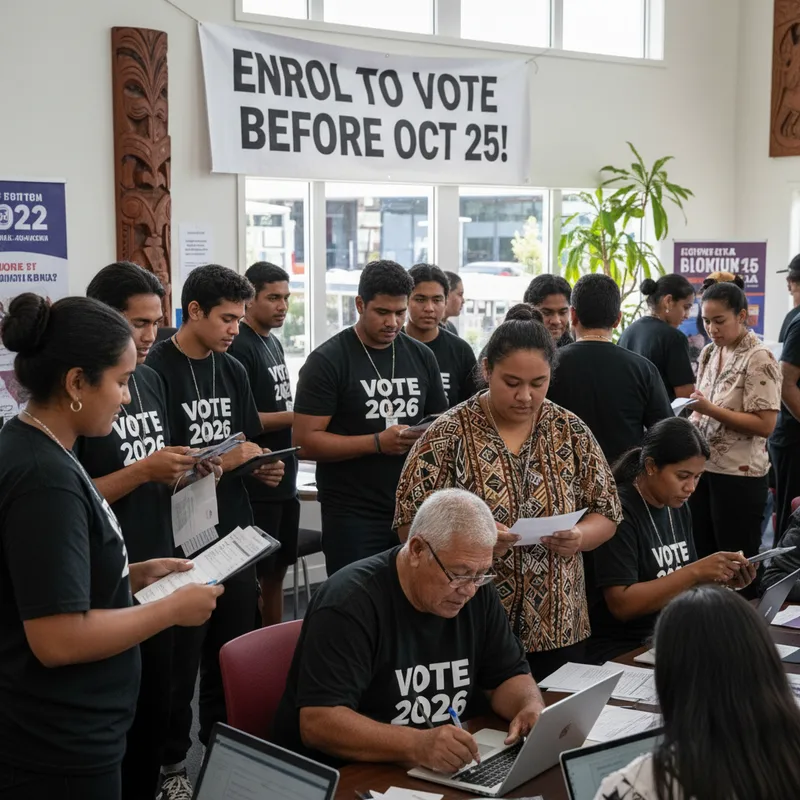
Pasifika communities, along with young people and shift workers, have historically relied more heavily on the flexibility of same-day registration. Mr Le Quesne acknowledged that these groups often face a unique set of barriers to voting, which the new deadline could amplify.
These challenges include navigating cost-of-living pressures which may mean working multiple jobs, limited access to transport, and a general sense of confusion or distrust around the political process. For many in South Auckland, issues such as the rising cost of petrol can mean a trip to a library or community centre to enrol is not always a priority, as highlighted by concerns that a new fuel payment 'falls short' for South Auckland families.
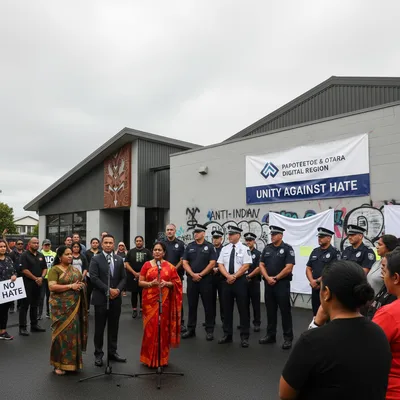
In past elections, community events and last-minute drives at polling booths were crucial for capturing voters who had not yet enrolled. Without this option, there is a real risk that thousands of potential voters, particularly in diverse areas like Papatoetoe and Ōtara, could be left voiceless.
Local focus on Papatoetoe and Ōtara
The changes are particularly pertinent in areas like Papatoetoe, which has historically recorded low voter turnout in local elections. With the added hurdle of an earlier enrolment deadline, community leaders are concerned that participation could fall even further, weakening the area's democratic representation at both local and national levels.
Past electoral cycles have seen their share of controversy and calls for greater scrutiny, making it more important than ever for residents to be informed and ready to participate. The new rules place a greater onus on individuals to be proactive about their enrolment, a significant shift from the previous system's safety net.
This shift could have long-term implications for political engagement in South Auckland. When specific demographics are under-represented on the electoral roll, it can skew results and lead to governance that does not fully reflect the diverse needs and perspectives of the community. For more on how local democracy functions, see how a Hamilton committee guides community wellbeing and services.
Commission launches outreach to boost enrolment
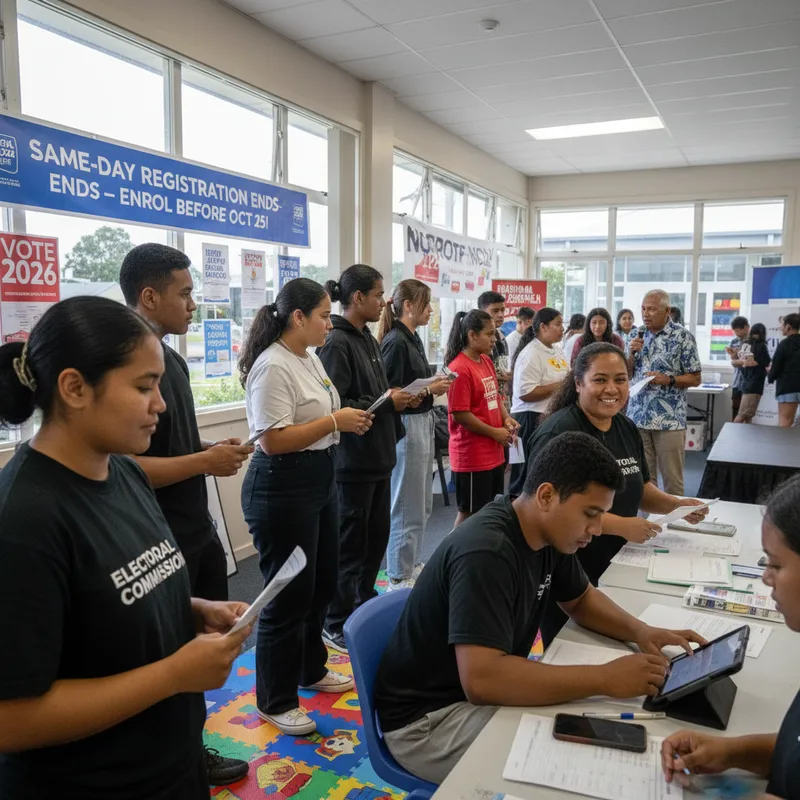
In response to these concerns, the Electoral Commission is increasing its outreach efforts to ensure as many people as possible are enrolled before the deadline. Mr Le Quesne said the Commission is running targeted programmes, including visits to schools, attending community events, and setting up pop-up enrolment centres in convenient locations.
The Commission is also partnering with local community groups who are trusted messengers to help spread the word and provide support to those who need assistance with the enrolment process. Information on how to enrol or check your details is available on the official Electoral Commission website.
Key dates for the 2026 general election are now set. Overseas voting begins on 21 October, with the final day to enrol being 25 October. Advance voting in New Zealand runs from Monday, 26 October, to Friday, 6 November, with the official election day on Saturday, 7 November.
Mr Le Quesne has a simple message for all New Zealanders: 'Get involved. Have your say'. He urges everyone to ensure they are correctly enrolled to participate in shaping the country's future.