
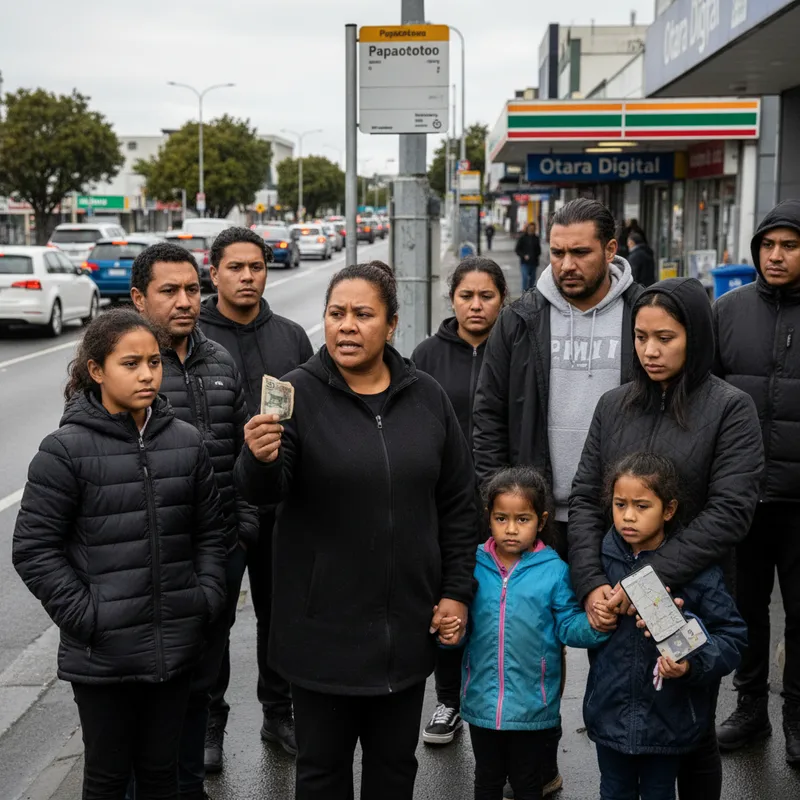
A new government fuel payment of $50 per week for some households has been criticised by South Auckland leaders and advocates, who say the support is a drop in the ocean for families already crippled by the soaring cost of living.
The relief payment, announced this week, is targeted at low to middle-income working families with dependent children. However, local representatives argue its narrow eligibility criteria and modest amount will do little to alleviate the intense financial pressure felt across communities in Papatoetoe and Ōtara, where car dependency is high and household budgets are stretched to their limits.
Ōtara-Papatoetoe Local Board member Apulu Reece Autagavaia said rising petrol prices are forcing families to make impossible choices. He described a scenario where a full tank can cost up to $200, forcing households to sacrifice essentials.
Support misses the mark for many
The government states the policy is designed to help those most affected by global economic pressures without exacerbating inflation. The payment will be delivered through the in-work tax credit, reaching an estimated 143,000 families, with another 14,000 becoming newly eligible.
If they have to get to work and it now costs $150, $200 to fill a tank… that means they have to cut from somewhere else. Is it from kids’ lunches? It’s going to push us to the edge of having to buy cheaper, unhealthier food.
But critics like Apulu argue many in the "working poor" demographic will miss out. These are households that may not meet the specific criteria for the in-work tax credit but are heavily reliant on their vehicles for their livelihood. In suburbs like Ōtara and Papatoetoe, which blend vibrant cultural centres with industrial hubs, many residents work in trades, shift work, or at locations poorly serviced by public transport, making driving a necessity.
Agnes Magele, a coordinator from Auckland Action Against Poverty, echoed these concerns, stating the payment does not reflect the scale of hardship. "Families that are already stretched to the breaking point, $50 a week isn’t going to stretch very far," she said. Magele works directly with families facing acute financial distress and says many are already juggling impossible decisions between fuel, food, and rent.
She pointed out that the most vulnerable, including beneficiaries and people in casual or part-time work with fluctuating incomes, are likely to be ineligible for the payment, leaving a significant portion of the community without any extra support.
Free public transport debated as a solution
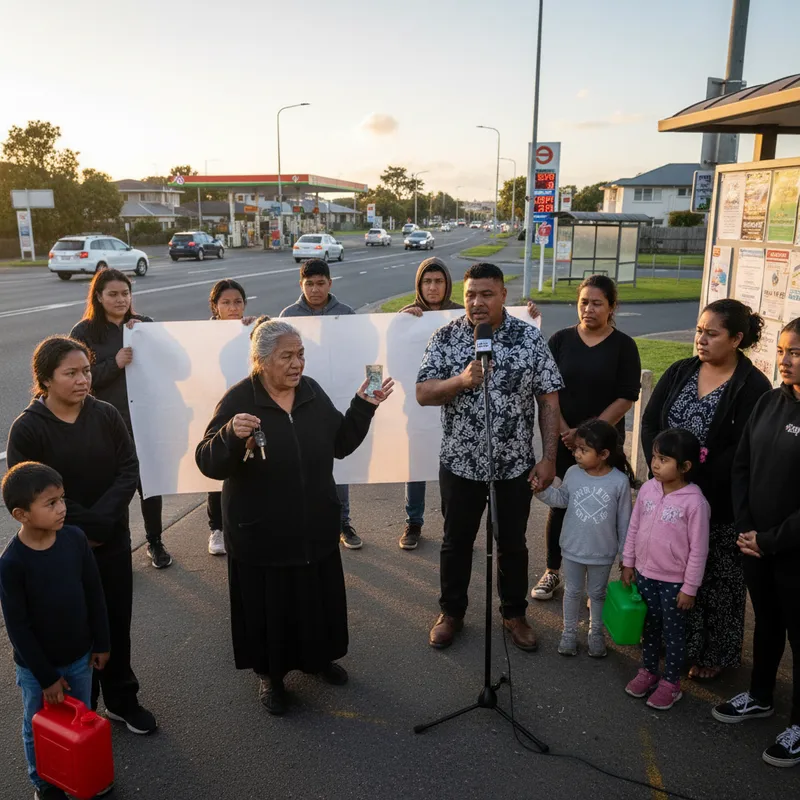
The strain of transport costs has reignited calls from local leaders for a more comprehensive solution: free public transport. Apulu described the idea as a potential "game changer" that could provide immediate and widespread relief for thousands of Aucklanders.
The push for fare-free services is not new, but it has gained momentum as fuel costs have continued to climb. Proponents argue it would not only ease budget pressures but also reduce traffic congestion and carbon emissions. However, Manukau ward councillor Alf Filipaina acknowledged the complexities involved. While he supports exploring the option, he noted that such initiatives come with significant trade-offs.
"Ultimately, the ratepayers will end up paying," Filipaina said, cautioning that any major shift in transport funding would have to be carefully considered. He stressed that while local government can advocate for residents, its direct power to implement such changes is limited and depends on broader council and government funding decisions. Council budgets are already under pressure, with Aucklanders facing decisions on rates and service levels.
Official response points to funding limits
Auckland Transport (AT) has acknowledged the financial strain on households. Richard Harrison, AT's General Manager, confirmed that fares will not increase despite the agency's own rising operational costs. "We recognise times are tough at the moment and a significant number of families face some difficult everyday decisions," he said.
Harrison highlighted existing support measures, including a $50 weekly fare cap and various discounted travel options, which he said delivered more than 886,000 free trips in the first year of the scheme. He maintained that AT must balance affordability with the need to maintain a reliable and frequent public transport network. "We need to make the most efficient use of the funding we receive," he stated.
From Wellington, Finance Minister Nicola Willis defended the targeted nature of the $373 million policy. "Those most affected by the global shockwaves hitting the New Zealand economy are lower-to-middle income families who cannot easily avoid higher fuel costs," she said. The policy, funded within existing budgets, was designed to avoid increasing government borrowing or inflation, which could happen with broader, more expensive measures like a universal fuel subsidy or significant tax cuts.
The payment is delivered via the in-work tax credit, a system designed to support working families. Willis said the government considered wider support options but was constrained by "the significant increase in debt."
For now, local leaders say they will continue to advocate for more substantial support. Filipaina noted that any proposed changes to transport funding, including ideas like fare subsidies, would need to be formally considered through Auckland Council’s annual plan process, where residents have the opportunity to submit feedback on spending priorities.