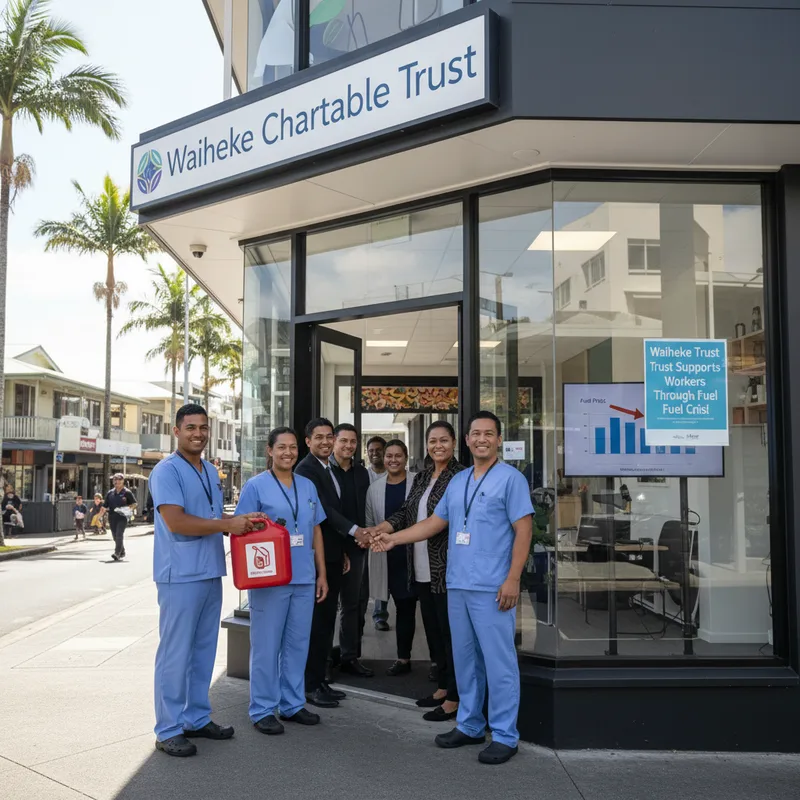
Permanently high fuel prices on Auckland’s Waiheke Island are placing immense strain on frontline healthcare workers, but the charitable trust overseeing the island's essential health services is stepping up with innovative measures to soften the blow.
With petrol now consistently at or above $4 a litre, the Waiheke Charitable Trust, which operates the island’s medical centre and community health programmes, is focused on supporting its staff and ensuring continuity of care for residents. The trust, a registered charity established for community benefit under the Charitable Trusts Act 1957, has a mandate to prioritise its services and people over profit, a mission that has become critical during the current crisis.
Jen Glover, chief executive of the trust, says that while Waiheke has always contended with some of the highest fuel costs in the nation, the recent surge driven by conflict in the Middle East has created an unprecedented challenge.
Trust shields workers from rising costs
The financial pressure is most acute for the trust's 18 home support workers, who rely on their personal vehicles to travel between clients across the island. These essential workers were previously reimbursed for mileage at a government-set rate of 63.5 cents per kilometre, a figure the trust considered inadequate.
Protecting staff from rising travel costs is critical to maintaining care in the community, and we wanted to recognise that they are the ones most feeling the pinch.</blockquote>
Ms Glover confirmed the trust had been paying its workers at the higher IRD kilometre rate since the beginning of 2024, a decision made well before the government recently announced a temporary 30% increase to the standard rate to help offset fuel costs. She said this was a matter of fairness, recognising the rate was about half the IRD's recommendation.
In addition to paying a higher mileage rate and a recent 3% pay increase for support workers, the trust has turned to the local community for help. In a heartening response, island businesses have provided vouchers for free yoga classes and movie tickets to help ease the financial and mental burden on the healthcare team.

"We also went to the community to see if they could help us offset the costs our workers are facing, and local vendors responded," Ms Glover said.
Sustainable solutions and fleet management
A key strategy in the trust’s long-term plan has been its investment in a fleet of electric cars. Built up over many years through community fundraising, the EV fleet for nurses and occupational therapists has proven to be a particularly prudent decision in the current economic climate.
Recognising the severe impact of fuel costs on its home support team, the trust has now made the EV fleet available for these workers to use on weekends. This innovative solution has delivered a dual benefit: it directly reduces workers' travel expenses and has made filling weekend rosters significantly easier.
"The fleet is used by our nurses and allocated workers during the week, but we’re now operating a system for their use on the weekends," Ms Glover explained. "It has become much easier to roster staff on for the weekend as people are more keen to work when they don’t have to cover fuel costs.”
As a non-profit entity registered with Charities Services, the trust is focused on reinvesting its resources into its charitable purpose, which includes the welfare of its staff and the community it serves. Ms Glover stated the organisation is committed to absorbing as many of the increased costs as possible to avoid passing them on to clients.
Looking to the future of island healthcare
The ongoing fuel crisis and the increasing frequency of severe weather events have underscored the need for more sustainable and localised models of healthcare delivery. Ms Glover says the current situation highlights the importance of finding ways to operate more efficiently and build local self-sufficiency. Digital Tools Bridge New Zealand Public to Court Records, in similar efforts to improve access and efficiency, have shown how quickly services can be disrupted.
"We all need to learn how to spend less to achieve more, to think about what we use and how, and to stay local and self-sufficient where possible. That’s heightened on the island!" she says.
To this end, the trust is actively exploring new solutions to reduce the need for residents to travel for medical care. Among the key initiatives being considered are the development of a fully integrated health hub on the island and the expansion of telehealth services. These measures would not only provide convenience and cost savings for residents but also contribute to a more resilient and sustainable healthcare system for Waiheke Island.