Auckland ratepayers face an average 7.9 per cent rates rise next year, with the City Rail Link a key cost driver.
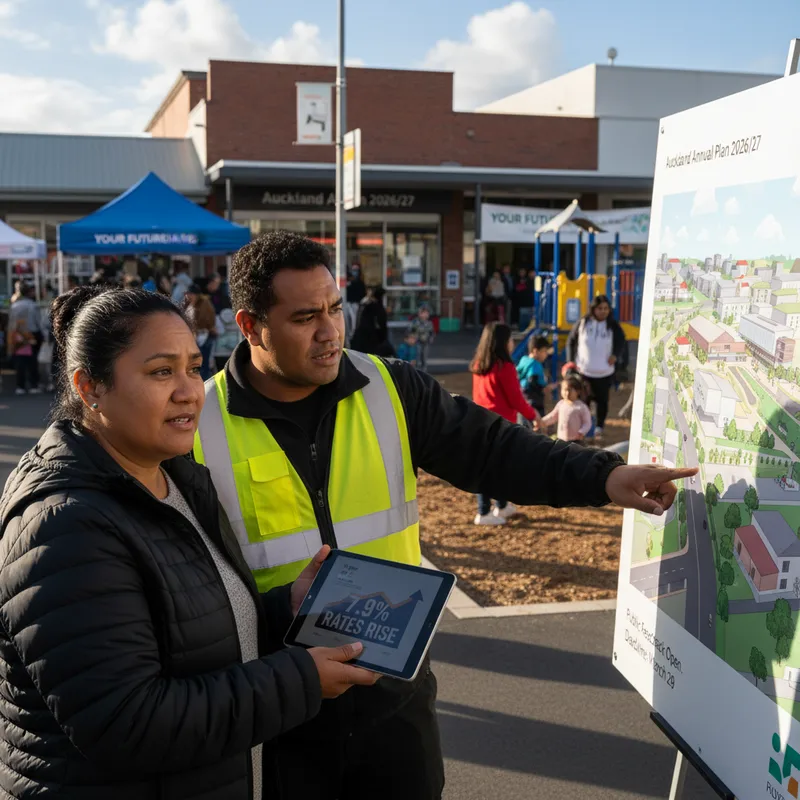
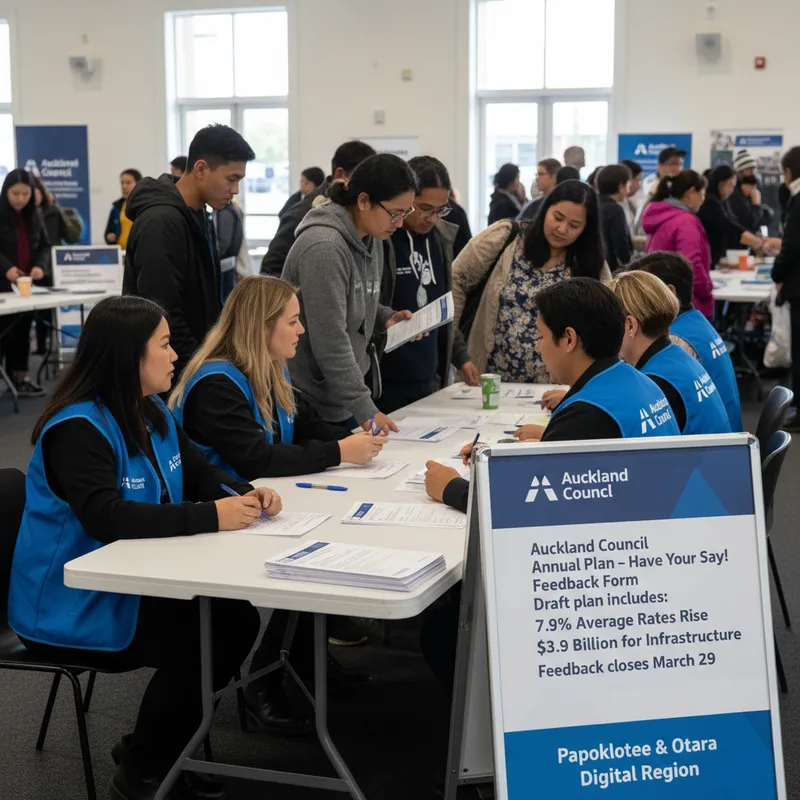
Auckland Council has opened public consultation on its Annual Plan 2026/2027, with submissions due by Sunday, 29 March.
The plan sets out the council’s spending and services from 1 July 2026, and asks residents to weigh in on priorities for transport, water and local board projects.
How to have your say on auckland council’s annual plan
Budget and Performance Committee chair Greg Sayers says the consultation is the main chance for the public to influence what gets funded before councillors vote in June.
“The Annual Plan consultation is how elected representatives hear what Aucklanders think about the plan for the year ahead and any hot topics or priorities they need to consider, as the Auckland Council heads to decision-making in June,” Sayers said.
He said the document includes Auckland-wide priorities and the 21 local board plans, and he urged people to take part through the online consultation.
Residents can read the plan and submit feedback through the council’s Have Your Say portal at Auckland Council Have Your Say.
The Annual Plan consultation is how elected representatives hear what Aucklanders think about the plan for the year ahead and any hot topics or priorities they need to consider, as the Auckland Council heads to decision-making in June.
Council staff will also attend in-person events across the region, with times and locations listed on the consultation page.
The council has also expanded ways to submit, including New Zealand Sign Language, Easy Read, large print and braille versions of the material.
People can also give feedback by recording audio or video, or request a one-to-one phone call with council staff.
What auckland council plans to spend in 2026/27
The draft plan proposes $3.9 billion of investment in infrastructure across Auckland and $5.3 billion for essential services.
Those services include pools, libraries, animal management, public transport and waste collection.
Group chief financial officer Ross Tucker says the year’s headline item is the opening of the City Rail Link, which is expected to change how trains run across the region.
“This includes the opening of the City Rail Link (CRL), which will deliver benefits region-wide, such as more frequent trains, new routes across town on a single train and more direct journeys into the city,” Tucker said.
Auckland Transport’s outline of the new network sits on its CRL project page at City Rail Link Auckland’s new network in 2026.
The council says the CRL will double the number of people who can reach the city centre by train within 30 minutes or less.
The plan also flags continuing work on public spaces around CRL stations and ongoing upgrades in High Street and Te Toangaroa.
What’s planned for water and wastewater projects
Watercare’s Central Interceptor remains a major project, with the council saying it will reduce wastewater overflows into central Auckland waterways.
The plan includes $500 million for Watercare renewals work to replace ageing pipes and treatment plant infrastructure.
Further north, Watercare is progressing an upgrade of Wellsford’s wastewater treatment plant and a $450 million wastewater programme at Snells Beach and Warkworth.
Council consultation material also asks for views on Auckland’s longer-term direction, to help shape transport planning, water service strategies and the next Long-term Plan for 2027 to 2037.
What the proposed 7.9% rates increase means for households
The council proposes a 7.9 per cent rates increase for the average value residential property in 2026/2027.
It says the City Rail Link is a key driver of the rise, as the council manages additional ownership and operational costs.
For an average household, annual rates are proposed to rise by about $320, from $4055 in 2025/2026 to $4375 in 2026/2027.
That equates to a total weekly rates cost of about $84, or $6.16 more per week, based on an average $1.28 million capital value residential property.
Ratepayers can check an estimate for their own property through the council’s online rates guide.
From 2027/2028, the average rates increase is forecast to be no more than 3.5 per cent for the rest of the Long-term Plan 2024-2034, according to the draft.
Targeted rates and fee changes for south auckland
The consultation includes proposed targeted rates changes, including a local services targeted rate for the Māngere-Ōtāhuhu and Ōtara-Papatoetoe local boards.
It also lists changes for the Waitākere Rural Sewerage Scheme and two business improvement district adjustments.
Among proposed fee updates is Auckland Transport’s residential parking permit, which would rise from $70 to $114 a year.
The council says the permit fee has not changed since 2013, and the increase would better recover the cost of administering and managing the process.
Local board spending often lands hardest in suburbs where community facilities carry heavy use, including areas that host major youth and cultural events. The debate over stable funding has also played out around festivals such as ASB Polyfest.
Consultation on budgets and representation can also overlap with other local political flashpoints, including scrutiny of voting processes highlighted during the Papatoetoe by-election.
Aucklanders weighing up household costs over the coming year may also look to what other councils are promoting in their events calendars, including the March weekend events guide.
The council will consider submissions before councillors vote on the final Annual Plan in June, ahead of it taking effect on 1 July 2026.