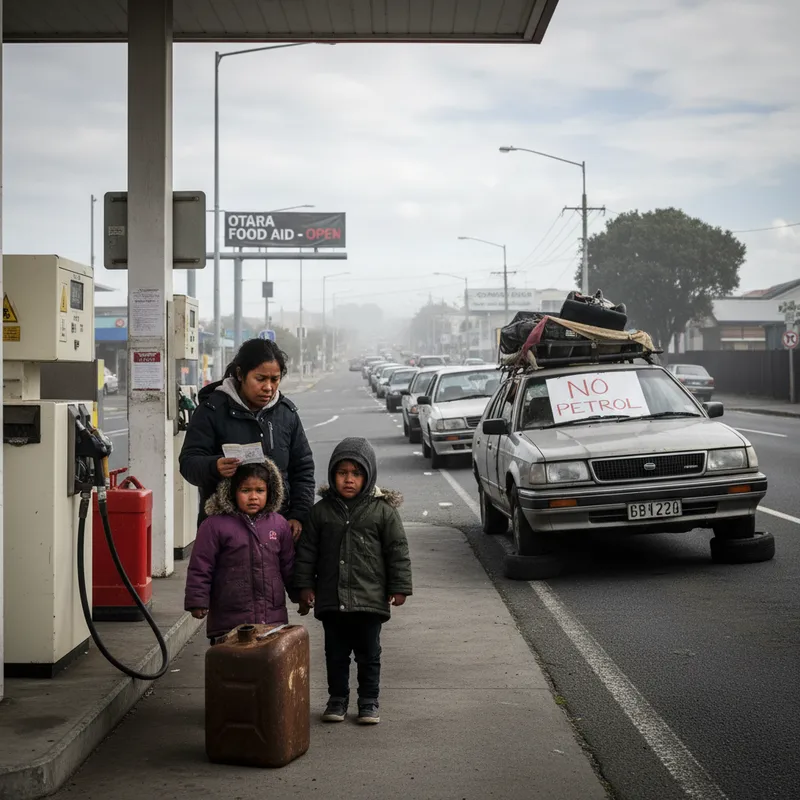
Auckland’s most vulnerable families are being forced to choose between fuel for their car and food on the table, as the soaring cost of petrol prevents them from collecting essential aid. Charities across the city are reporting a significant and troubling increase in the number of food parcels that go uncollected, not because of a lack of need, but because households cannot afford the transport to pick them up.
The startling trend reveals a new layer of hardship sparked by the global oil supply disruption from the war in Iran. For many, the choice is stark: use the last of their petrol to get children to school or travel to a food bank. St Vincent de Paul (Vinnies) in Onehunga has seen a surge in phone requests for food, but a simultaneous drop in actual pick-ups.
“We have felt it’s like going back to Covid times where people are trying to figure out how they could come to pick up stuff. They were asking us if there were deliveries,” Soti says.
A dramatic rise in no-shows
The data from across Auckland’s social support network paints a clear picture of the crisis. Historically, St Vincent de Paul saw only 1-4% of its scheduled food support go uncollected each week. But between early March and mid-April, this "unable to pick up" rate skyrocketed to an average of 14.4%. In one week in late March, it peaked at a staggering 26.3%.
People save whatever they have left to go pick up the kids, as opposed to come and get food over here, you know. A lot of what we experience here is that food is a discretionary item.
In concrete terms, Vinnies Tāmaki Makaurau recorded 64 families unable to collect food in February, a number that jumped to 87 in March. “This is not about disengagement. It is about access, and in particular, the cost of petrol,” Soti says.
The experience is mirrored at other organisations. Village Community Trust in Avondale has seen the same perplexing situation of high demand coupled with an unusual number of no-shows. Chief executive Maliena Jones says some families are deferring appointments to other days when they can arrange to carpool with someone else. Likewise, Auckland City Mission recorded a 10% increase in uncollected parcels between February and March, from 51 up to 65. Tara Moala, the mission's general manager of food security, says her team is fielding more and more requests for delivery, a service they are not equipped to provide to individual households.
Desperate measures for survival
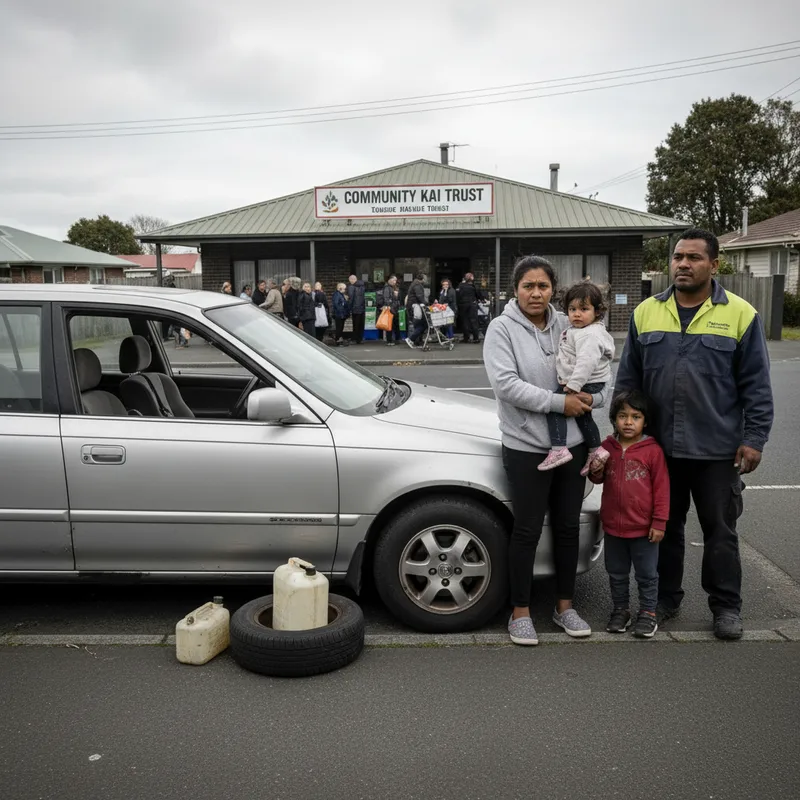
The transport barrier is forcing families into desperate and often heart-wrenching situations. Community hubs report seeing whānau carpooling, with as many as three families squeezing into a single vehicle to collect their bulky parcels. Others arrive on public transport, sometimes with empty suitcases to try and manage the journey home with their supplies. The sight of people trying to balance large food boxes on small mopeds or bicycles is becoming more common.
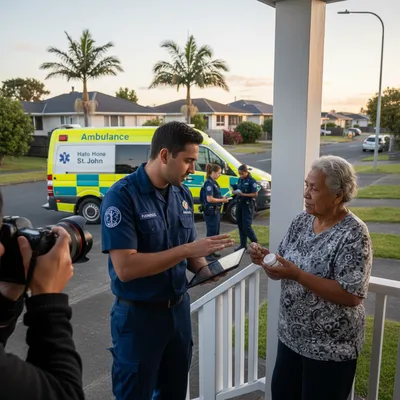
“It’s heart-wrenching to see, because you can’t offer any rides,” says Soti. She adds that it is not uncommon for her staff to be jump-starting cars or providing a can of petrol for visitors who arrive running on empty, having used their last fuel to reach the hub.
The struggle extends beyond food aid. Vinnies has also noticed a rise in absenteeism from its budgeting and debt-mentoring services, as clients simply cannot afford to attend their appointments. The fuel crisis is creating a vicious cycle, cutting people off from the very services designed to help them escape financial hardship.
Government response and historical parallels
The New Zealand government has acknowledged the pressure on families. Social Development Minister Louise Upston points to recent support measures, including a $50 per week boost to the In-Work Tax Credit for about 143,000 families, which is tied to the high price of fuel. She also noted increases to payments for superannuitants, students, and beneficiaries that took effect on April 1, 2026. A couple with children, for instance, will receive an additional $40 a fortnight.
Amid the current volatility, the government is also taking proactive steps to shore up the country's fuel resilience. It has called for public and business input to identify and remove regulatory "red tape" in the fuel supply chain, as reported by the Auckland Tribune. A National Fuel Plan, similar to the Covid-19 alert level system, has been established to manage future disruptions.
The situation has drawn comparisons to previous energy crises. During the 1979 oil crisis, which was also triggered by turmoil in Iran, New Zealand implemented a "carless days" scheme. This required vehicle owners to choose one day of the week on which they would not drive, in an effort to curb national petrol consumption. While the government says such measures are not yet needed, they remain a possibility under the longstanding Petroleum Demand Restraint Act if the supply is severely disrupted.
A 'doom loop' of poverty
For those on the front lines, the situation represents a deepening crisis. Auckland Central MP Chlöe Swarbrick says the stories from charities "anecdotally track" with what communities are reporting on the ground. She describes the current situation as a "doom loop" where existing struggles are profoundly amplified by the fossil fuel crisis. With reports of rising community tensions and crime, the added pressure on vulnerable families is a growing concern.
Swarbrick also raises concerns that access to support services is becoming more difficult, claiming the government has cut contracts with many providers. As charities and community leaders grapple with the logistical nightmare, they see "super clever" and resourceful mothers carpooling and coordinating pick-up times to ensure their families can survive.
Tara Moala of the City Mission says her organisation is exploring options to deliver to community drop-off points, rather than individual homes, to ease the travel burden. For now, however, whānau in high need must continue to "work hard to be able to survive," finding their own ingenious ways to navigate a crisis that has turned a tank of petrol into a luxury item.