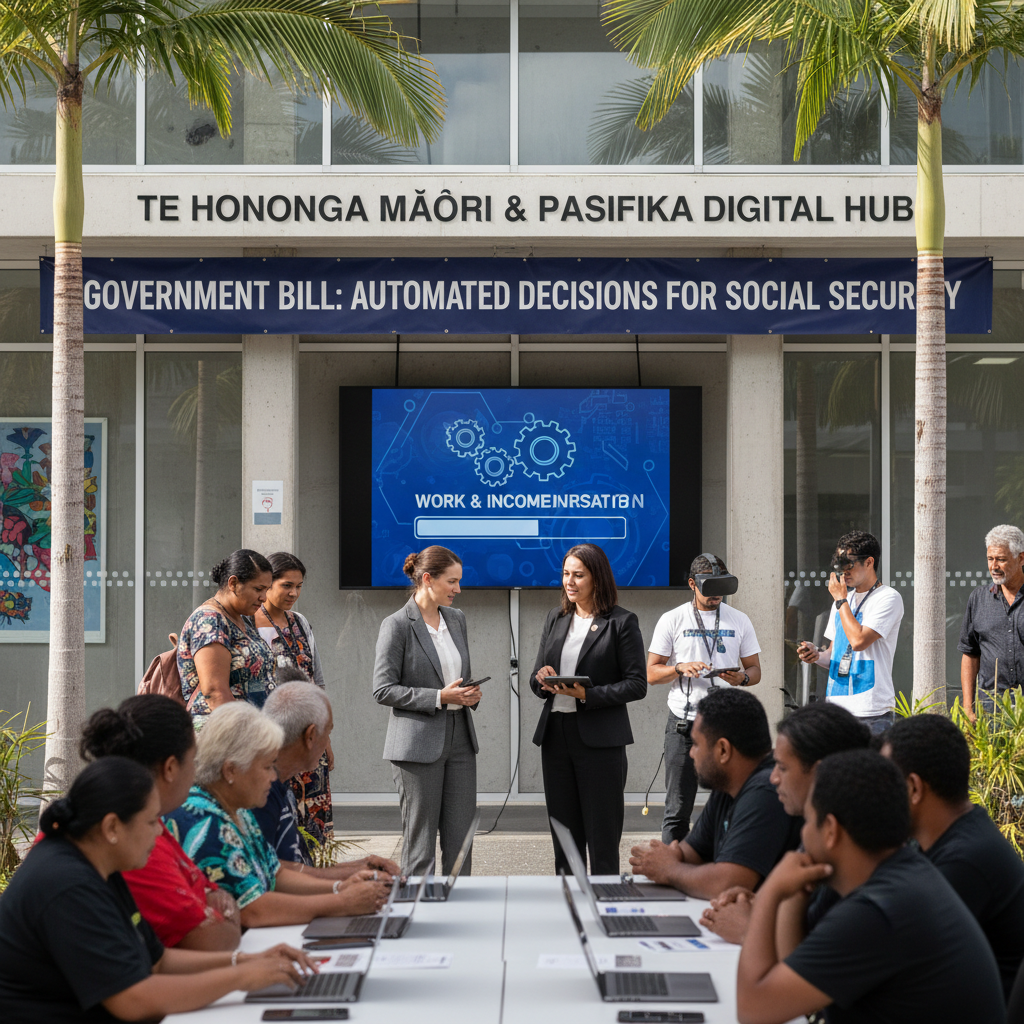
The Government has introduced a new bill into Parliament designed to modernise the social security system by increasing the use of automated decision-making. The Social Security (Modernisation) Amendment Bill 2026, announced on 29 May, aims to update processes at Work and Income, the public-facing service of the Ministry of Social Development (MSD).
This legislative change would give the ministry greater scope to use computer-based algorithms to make decisions about welfare entitlements, applications, and payments. While the government says this will make services more efficient, the move towards automation in the welfare system has raised questions about transparency, fairness, and the potential impact on vulnerable New Zealanders, including many residents in Papatoetoe and Ōtara.
Work and Income provides a critical lifeline for many Kiwis, offering support for job seekers, those on low incomes, seniors, and people with housing needs. Its services range from providing the Job Seeker Support benefit and NZ Superannuation to assistance with accommodation costs and emergency grants for living expenses. For many families, especially in communities like South Auckland, this support is essential for making ends meet. In a similar development, the Federal government is set to support the southern Ontario sport-tech sector.
The proposed expansion of automation is intended to streamline the delivery of these services. Currently, many decisions are made by individual case managers who assess a person's circumstances against a set of criteria. The new bill suggests a future where software could handle a larger portion of this workload, potentially speeding up application processing and payment calculations.
How automated decision-making works
Automated decision-making (ADM) involves using technology, data, and algorithms to make choices that a human would traditionally make. In the context of social security, this could mean an automated system assesses an online application, checks it against eligibility rules stored in its database, and automatically approves, denies, or calculates the level of support a person is entitled to receive.
Proponents of such systems argue they can increase efficiency, reduce administrative backlogs, and apply the rules more consistently than different human case managers might. This could lead to faster outcomes for people in urgent need and free up staff to handle more complex and sensitive cases that require human judgment and empathy. The government's stated goal of 'modernising our processes' aligns with these potential benefits, aiming for a more responsive and cost-effective welfare system.
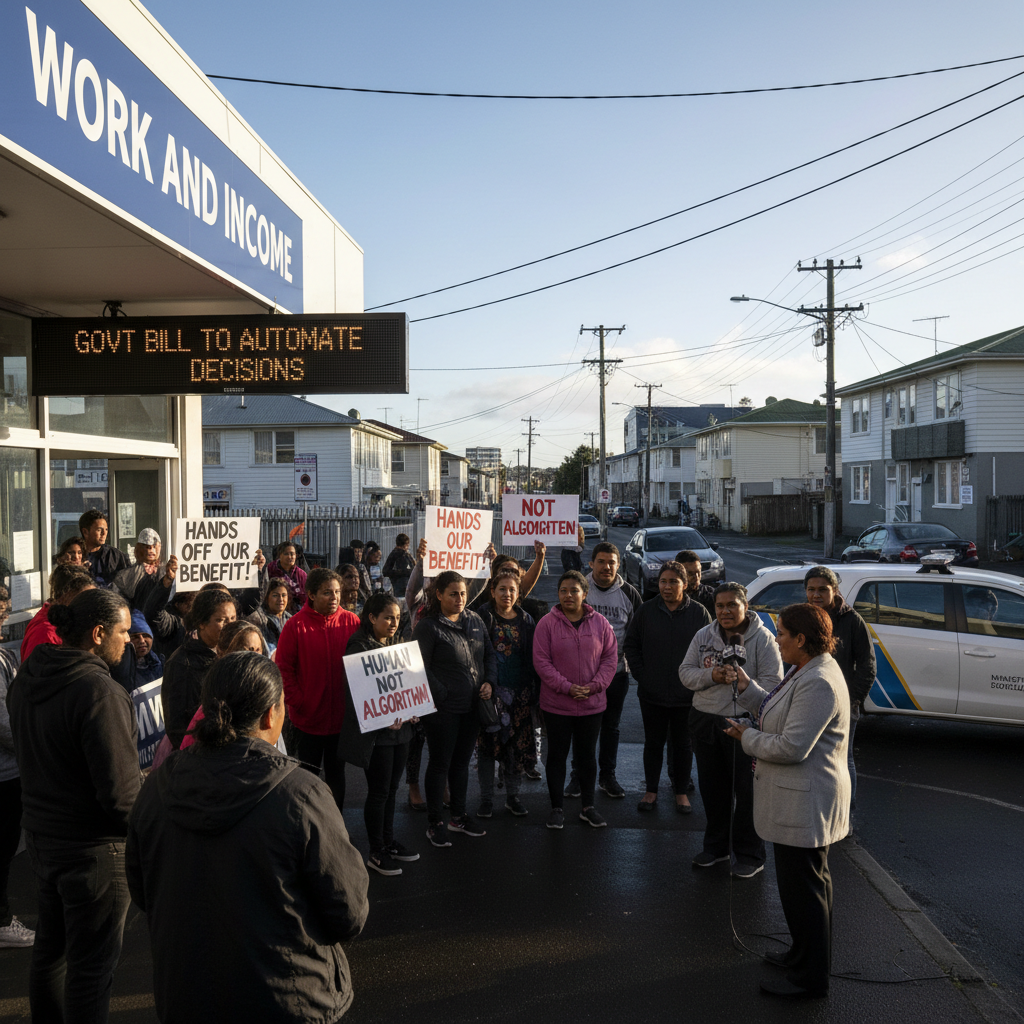
However, the use of ADM in public services has been a subject of significant international debate. Experiences in other countries have highlighted potential risks, leading to calls for robust safeguards and human oversight. Critics worry about the potential for algorithmic bias, where a system might inadvertently discriminate against certain groups of people based on the historical data it was trained on.
Potential impacts for South Auckland communities
For residents in Papatoetoe and Ōtara, neighbourhoods with a high reliance on social support systems, the shift towards automation presents both opportunities and challenges. The promise of faster processing for things like childcare assistance or accommodation supplements could be a significant help for families facing immediate financial pressure. A more detailed overview of the community's makeup can be found in a guide to living in Papatoetoe and Ōtara.
However, concerns about a 'digital divide' are particularly relevant. The move requires clients to interact with online portals like MyMSD. A warning on the Work and Income website notes that users with older Android phones may soon have trouble accessing its services, highlighting how technology updates can leave some people behind. Many in the community may lack consistent access to the internet, modern devices, or the digital literacy needed to navigate complex online forms, potentially creating new barriers to accessing support.
Furthermore, the complexity of many people's lives in the area may not be easily captured by an algorithm. A person juggling part-time work, caring for relatives, and dealing with health issues might have circumstances that don't fit neatly into an automated checklist. The lack of human discretion in such systems could lead to unfair outcomes or a frustrating inability to have one's unique situation understood. The potential for errors in an automated system could have devastating consequences for individuals and whānau who depend on timely and accurate payments for their basic needs.
A broader pattern of change
The modernisation bill is the latest in a series of recent government announcements affecting Work and Income clients. It follows changes to housing support announced on 21 May, which include prioritising social housing for those with the most severe and urgent needs and adjusting subsidies. An automated system could potentially be used to score and rank applicants based on their level of need, making the process faster but also less personal.
These initiatives, alongside changes flagged in the 2026 Budget, suggest a systemic overhaul of how social services are delivered in New Zealand. While automation is often framed as a neutral tool for efficiency, its implementation in the welfare sector is deeply political and has significant social justice implications. Similar debates are occurring in other public sectors, such as efforts to address the shortage of doctors in regional areas through new training programmes.
With the Social Security (Modernisation) Amendment Bill 2026 now introduced, it will begin its journey through the parliamentary process. This involves scrutiny from a select committee, which will likely call for public submissions. This will be the key opportunity for community organisations, welfare advocates, and the public to voice their opinions on the proposed changes, ensuring that any move towards automation includes safeguards to protect the most vulnerable. Information on how this process works can be found on the New Zealand Parliament website.